Understanding Digital Wallets: How They Store and Protect Your Blockchain Assets
A comprehensive guide to digital wallet technology, explaining how cryptographic keys work, the differences between custodial and non-custodial solutions, and essential security principles for managing blockchain assets.
Digital wallets have become essential tools for anyone interacting with blockchain networks and digital assets. Unlike traditional wallets that hold physical currency, digital wallets don't actually store your assets. Instead, they manage the cryptographic keys that prove ownership and enable transactions on blockchain networks. Understanding how these wallets work is fundamental to safely participating in the digital economy.
This guide explains the core technology behind digital wallets, breaking down complex concepts into accessible terms. Whether you're new to blockchain technology or looking to deepen your understanding, you'll learn how wallets function, the critical importance of key security, and the fundamental differences between various wallet types.
By the end of this article, you'll have a clear picture of how digital wallets enable secure interaction with blockchain networks and why proper key management is essential for protecting your digital assets.
What Digital Wallets Actually Do
The term "digital wallet" can be misleading because these tools don't store digital assets in the way a physical wallet stores cash. Your blockchain assets exist as records on a distributed ledger maintained across thousands of computers worldwide. What a digital wallet actually stores and manages are your cryptographic keys—the digital credentials that prove you own specific assets and authorize transactions.
Think of a digital wallet as a sophisticated key manager rather than a storage container. When you want to send assets to someone else, your wallet uses your private key to create a digital signature that proves you're authorized to make that transaction. The blockchain network verifies this signature and updates the ledger accordingly. Your wallet also generates addresses where others can send assets to you, derived from your public key.
Key Insight: Your digital assets never leave the blockchain. A wallet simply manages the keys that give you control over those assets recorded on the distributed ledger.
Digital wallets also provide user-friendly interfaces for interacting with blockchain networks. They display your asset balances, transaction history, and current network conditions. They help you construct transactions, calculate appropriate fees, and broadcast signed transactions to the network. Without a wallet, you'd need to interact directly with blockchain protocols using command-line tools—a process far too technical for most users.
Modern wallets support multiple blockchain networks, allowing you to manage assets across different platforms from a single interface. They may also include features like address book management, transaction labeling, and integration with decentralized applications. However, at their core, all digital wallets perform the same fundamental function: securely managing your cryptographic keys.
Understanding Public and Private Keys
The security of digital wallets relies on public-key cryptography, a mathematical system that uses pairs of related keys. Each wallet generates a private key—a long, random number that must be kept secret—and derives a corresponding public key from it. These keys work together but serve different purposes in the blockchain ecosystem.
Your private key is like a master password that proves ownership and authorizes transactions. It's used to create digital signatures that validate your transactions without revealing the key itself. Anyone who gains access to your private key can control all assets associated with it, which is why keeping it secure is absolutely critical. Private keys are typically 256 bits of random data, making them virtually impossible to guess through brute force.
The public key, derived mathematically from your private key, can be shared freely. It's used to generate your wallet addresses—the identifiers others use to send you assets. The mathematical relationship between public and private keys is one-way: you can easily derive a public key from a private key, but it's computationally infeasible to reverse the process. This asymmetry is what makes the system secure.

When you create a transaction, your wallet uses your private key to generate a unique digital signature for that specific transaction. The blockchain network can verify this signature using your public key, confirming that the transaction was authorized by the holder of the corresponding private key—without ever seeing the private key itself. This verification process happens automatically and nearly instantaneously.
Most modern wallets use hierarchical deterministic (HD) key generation, which creates multiple key pairs from a single seed phrase. This allows one wallet to manage many addresses while requiring you to back up only one master seed. Each address can be used independently, improving privacy by making it harder to link all your transactions together.
Custodial vs Non-Custodial Wallets: Understanding the Difference
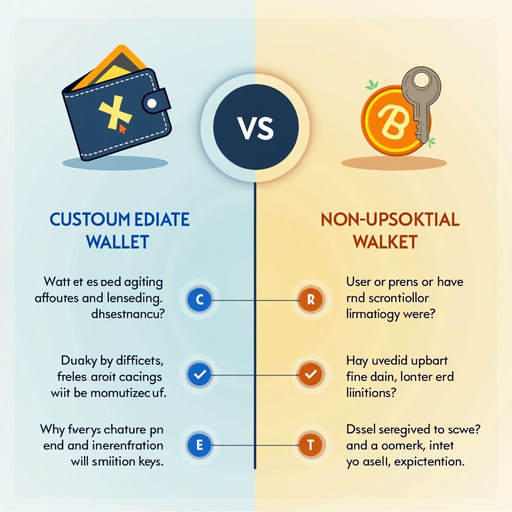
One of the most important decisions when choosing a digital wallet is whether to use a custodial or non-custodial solution. This choice fundamentally affects who controls your private keys and, by extension, who has ultimate control over your assets. Understanding this distinction is essential for making informed decisions about wallet security and responsibility.
Custodial Wallets
Custodial wallets are provided by third-party services that hold your private keys on your behalf. When you use a custodial wallet, you're essentially trusting the service provider to secure your keys and execute transactions when you request them. Many exchange platforms offer custodial wallets as part of their services, making it convenient to trade and manage assets without handling keys directly.
The main advantage of custodial wallets is convenience. You don't need to worry about backing up seed phrases or managing complex security procedures. If you forget your password, the service provider can help you recover access through standard account recovery processes. Custodial wallets often provide user-friendly interfaces and customer support, making them accessible to newcomers.
However, custodial wallets come with significant tradeoffs. You're trusting the service provider with complete control over your assets. If the provider experiences security breaches, operational failures, or legal issues, your assets could be at risk. You also depend on the provider's policies regarding withdrawals, fees, and account access. The phrase "not your keys, not your coins" reflects the blockchain community's emphasis on the importance of key ownership.
Non-Custodial Wallets
Non-custodial wallets give you complete control over your private keys. These wallets generate and store keys on your device, and only you have access to them. When you create a non-custodial wallet, you receive a seed phrase—typically 12 or 24 words—that can regenerate all your keys if needed. This seed phrase is your ultimate backup and must be protected carefully.
The primary benefit of non-custodial wallets is sovereignty. You have complete control over your assets without depending on any third party. No one can freeze your account, restrict your transactions, or access your funds without your private keys. This aligns with blockchain's core principle of decentralization and gives you true ownership of your digital assets.
Important: With non-custodial wallets, you bear full responsibility for security. If you lose your seed phrase and device access, there's no customer service to help recover your assets. This responsibility requires careful planning and secure backup procedures.
Non-custodial wallets come in various forms, including software wallets (mobile and desktop applications), browser extensions, and hardware wallets (physical devices that store keys offline). Each type offers different balances of convenience and security, but all share the fundamental characteristic of keeping your keys under your exclusive control.
Essential Private Key Security Principles
Securing your private keys is the most critical aspect of using digital wallets. Unlike traditional financial systems where institutions can reverse fraudulent transactions or restore lost accounts, blockchain transactions are irreversible. Once someone gains access to your private keys, they can transfer your assets permanently, with no recourse for recovery. Understanding and implementing proper security practices is essential.
Never Share Your Private Keys or Seed Phrase
Your private keys and seed phrase should never be shared with anyone, under any circumstances. Legitimate wallet providers and blockchain services will never ask for your private keys or seed phrase. Any request for this information is a red flag indicating a potential security threat. Even customer support representatives from reputable services should never need access to your keys.
Be particularly cautious of phishing attempts—fraudulent websites or communications designed to trick you into revealing your keys. Always verify you're using official wallet applications and websites. Double-check URLs, use bookmarks for frequently accessed sites, and be skeptical of unsolicited messages claiming to be from wallet providers or blockchain services.
Secure Backup Practices
When you create a non-custodial wallet, you'll receive a seed phrase that can restore your wallet if your device is lost or damaged. Write this phrase down on paper and store it in a secure location—preferably multiple secure locations. Never store your seed phrase digitally in plain text, such as in notes apps, cloud storage, or email. Digital storage creates vulnerability to hacking and unauthorized access.
Consider using metal backup solutions designed specifically for seed phrase storage. These devices allow you to engrave or stamp your seed phrase onto durable metal plates that resist fire, water, and physical damage. While paper backups work for many users, metal backups provide additional protection against environmental hazards.
Device Security
The device where your wallet software runs must be secure. Keep your operating system and wallet applications updated with the latest security patches. Use strong, unique passwords for device access and enable biometric authentication when available. Avoid using public or shared computers for accessing your wallet, as these devices may have compromised security.
For significant asset holdings, consider using a hardware wallet—a dedicated physical device designed specifically for storing private keys offline. Hardware wallets keep your keys isolated from internet-connected devices, providing strong protection against remote attacks. Even if your computer is compromised, attackers cannot access keys stored on a hardware wallet without physical access to the device.
Transaction Verification
Always carefully verify transaction details before confirming them. Check recipient addresses character by character—malware can sometimes replace copied addresses with attacker-controlled addresses. Verify transaction amounts and network fees. Once a transaction is broadcast to the blockchain, it cannot be reversed, so taking time to verify details is crucial.
Many wallets support address book features that let you save and label frequently used addresses. Using these features reduces the risk of errors when entering addresses manually. Some wallets also support QR code scanning, which eliminates typing errors when transferring addresses between devices.
How Wallet Technology Works Behind the Scenes
Understanding the basic technical processes that occur when you use a digital wallet helps demystify blockchain interactions and builds confidence in the technology. While the mathematics behind cryptography is complex, the fundamental operations wallets perform follow logical patterns that can be understood without advanced technical knowledge.
Key Generation Process
When you create a new wallet, the software generates a random number using your device's secure random number generator. This random number becomes your private key. The wallet then uses mathematical algorithms to derive your public key from this private key. From the public key, the wallet generates one or more addresses where you can receive assets.
Modern wallets typically use hierarchical deterministic (HD) key generation, which creates a tree structure of keys from a single seed. This seed is represented by your recovery phrase—those 12 or 24 words you're instructed to write down. The wallet can generate billions of different key pairs from this single seed, allowing you to use multiple addresses while only needing to back up one seed phrase.
Transaction Creation and Signing
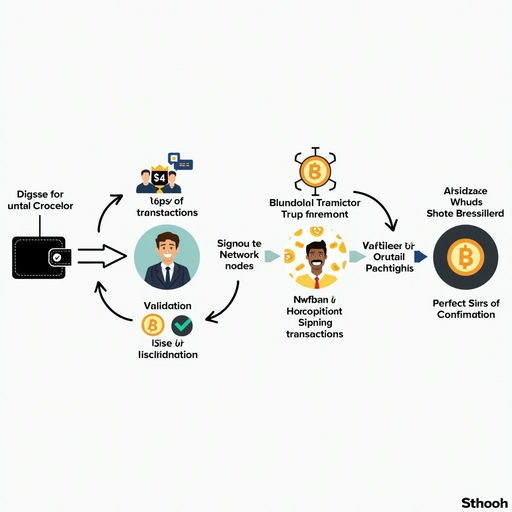
When you want to send assets, your wallet constructs a transaction message containing the recipient's address, the amount to send, and other necessary information. The wallet then uses your private key to create a digital signature for this specific transaction. This signature proves that you, as the holder of the private key, authorize this particular transaction.
The signature is mathematically linked to both your private key and the specific transaction details. If even one character in the transaction changes, the signature becomes invalid. This ensures that no one can alter your transaction after you've signed it. The wallet broadcasts this signed transaction to the blockchain network, where nodes verify the signature using your public key before adding the transaction to the blockchain.
Balance Calculation
Your wallet doesn't actually store your asset balance—it calculates it by scanning the blockchain for all transactions involving your addresses. When you open your wallet, it queries blockchain nodes to find all incoming transactions to your addresses and all outgoing transactions you've authorized. By adding up the incoming amounts and subtracting the outgoing amounts, the wallet determines your current balance.
This is why you can restore your wallet on a new device using just your seed phrase. The seed phrase regenerates your private keys, which derive your public keys and addresses. The wallet then scans the blockchain for transactions involving those addresses and recalculates your balance. Your assets never left the blockchain—the wallet simply reconnects you to them.
Network Communication
Wallets communicate with blockchain networks through nodes—computers that maintain copies of the blockchain and relay transactions. Some wallets run their own nodes, giving you direct access to the blockchain. Others connect to remote nodes operated by the wallet provider or community members. Light wallets use simplified verification methods that don't require downloading the entire blockchain.
When you broadcast a transaction, your wallet sends it to one or more nodes, which verify the signature and relay it to other nodes. This peer-to-peer propagation continues until the transaction reaches miners or validators who include it in a new block. Your wallet monitors the network to detect when your transaction has been confirmed and updates your balance accordingly.
Building Confidence Through Understanding
Digital wallets serve as your gateway to blockchain networks, managing the cryptographic keys that prove ownership and authorize transactions. By understanding how these tools work—from the relationship between public and private keys to the differences between custodial and non-custodial solutions—you can make informed decisions about securing and managing your digital assets.
The choice between custodial and non-custodial wallets involves tradeoffs between convenience and control. Custodial wallets offer user-friendly experiences with institutional support, while non-custodial wallets provide complete sovereignty over your assets. Neither option is inherently superior—the right choice depends on your technical comfort level, security priorities, and how you plan to use blockchain technology.
Regardless of which wallet type you choose, private key security remains paramount. Implementing proper backup procedures, maintaining device security, and carefully verifying transactions are essential practices for anyone holding digital assets. The irreversible nature of blockchain transactions means that security mistakes can have permanent consequences, making education and careful practices crucial.
As blockchain technology continues to evolve, wallet software becomes increasingly sophisticated while remaining accessible to non-technical users. Modern wallets abstract away much of the underlying complexity, allowing you to interact with blockchain networks through intuitive interfaces. However, understanding the fundamental principles behind these tools empowers you to use them more effectively and securely.
The technology enabling digital wallets—public-key cryptography, hierarchical key derivation, and digital signatures—represents decades of cryptographic research applied to practical problems. While you don't need to understand the mathematical details, recognizing that these systems are built on well-established security principles can provide confidence in their reliability when used properly.
Key Takeaways
- Digital wallets manage cryptographic keys rather than storing assets directly
- Private keys must be kept secure and never shared with anyone
- Custodial wallets offer convenience while non-custodial wallets provide complete control
- Proper backup procedures are essential for protecting access to your assets
- Understanding wallet technology helps you make informed security decisions
By grasping these fundamental concepts, you're better equipped to navigate the blockchain ecosystem safely and confidently. Whether you're just beginning to explore digital assets or looking to deepen your understanding of the technology, recognizing how wallets function provides a solid foundation for further learning and practical application.